
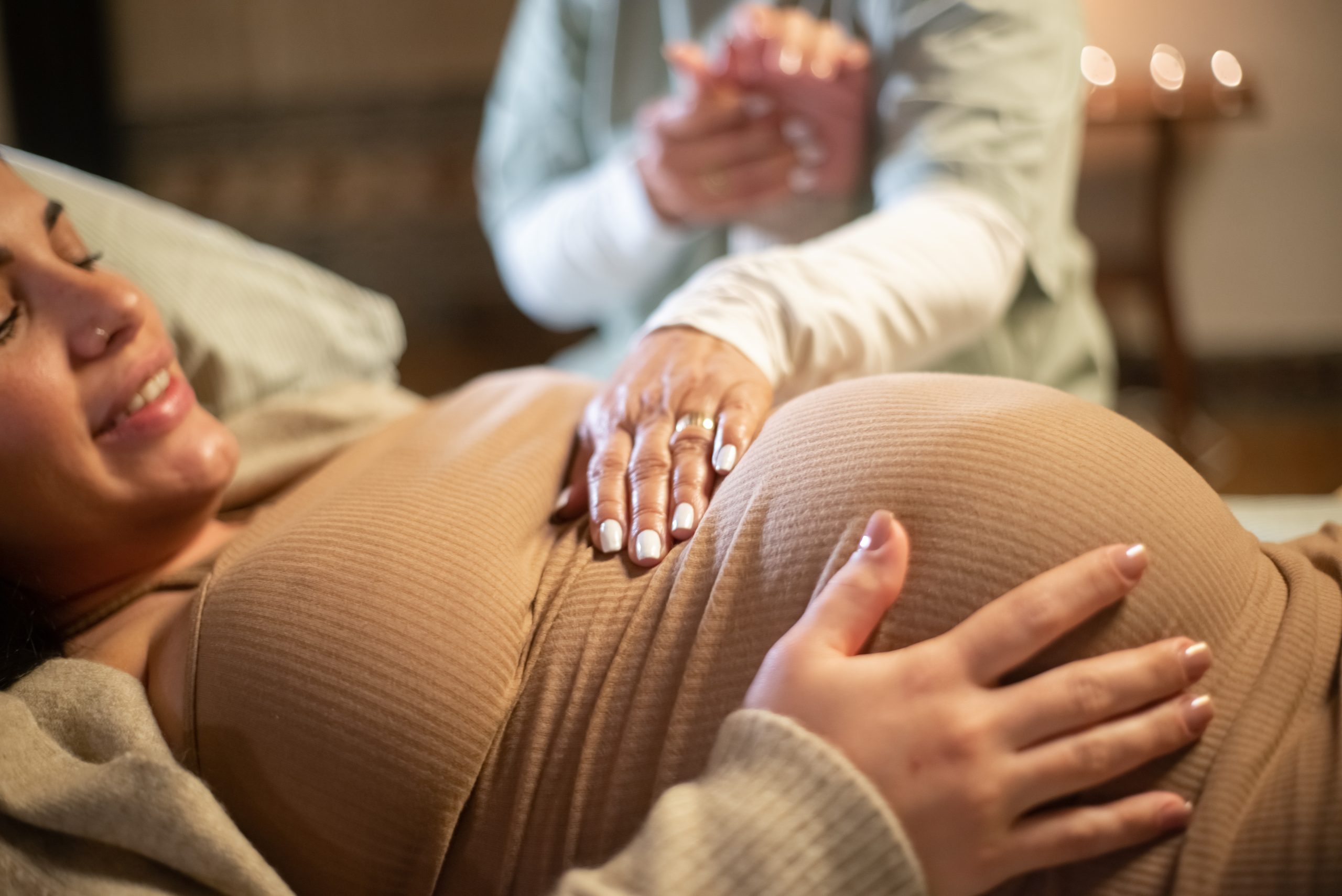
Pregnancy can change how your entire body feels. As your posture, weight distribution, and daily comfort change, you may notice general muscle tension, fatigue, or difficulty finding time to relax.
Prenatal Massage is a massage service adapted for pregnancy. It uses supportive positioning, adjustable pressure, and techniques selected for the pregnant guest’s comfort and stage of pregnancy.
At Spa of Awakening in Naples, FL, Pre and Post Natal Massage is currently available in 60- and 90-minute appointments. Before booking, discuss the service with your prenatal healthcare provider and tell the spa about your pregnancy, health history, symptoms, and any restrictions.
Quick Answer: Is Prenatal Massage Safe?
Prenatal Massage may be appropriate for many people with uncomplicated pregnancies when:
- Their prenatal healthcare provider has no concerns
- The massage therapist is appropriately trained
- Positioning is adapted for pregnancy
- Pressure remains comfortable
- Relevant symptoms and medical history are disclosed
- Areas of concern are avoided
- The session is stopped if discomfort develops
Pregnancy experiences and risks vary. A massage therapist cannot determine whether your pregnancy is low-risk or diagnose the cause of pain or swelling.
When you are uncertain, ask your OB-GYN, midwife, or other qualified prenatal provider before scheduling.
What Is Prenatal Massage?
Prenatal Massage is bodywork modified to accommodate the physical changes and safety considerations of pregnancy.
The appointment may focus on relaxation and general areas of tension such as the:
- Shoulders
- Upper back
- Lower back
- Hips
- Legs
- Feet
- Arms and hands
The therapist may adjust:
- Your position
- Pillow and bolster placement
- Pressure
- Areas treated
- Session length
- Massage techniques
- Use of heat or enhancements
- Frequency of position changes
Prenatal Massage should not be described as treating pregnancy complications or guaranteeing relief from pain, swelling, insomnia, or other symptoms.
Prenatal Massage vs. Regular Massage
| Prenatal Massage | Regular Massage |
|---|---|
| Specifically adapted for pregnancy | Not automatically adapted for pregnancy |
| Uses pregnancy-appropriate positioning | May include lying flat on the stomach or back |
| Requires discussion of pregnancy history | Uses a general health intake |
| Pressure may be modified | Pressure depends mainly on massage style |
| Certain areas or techniques may be avoided | Fewer pregnancy-specific restrictions |
| Comfort may be checked more frequently | Standard comfort checks |
| Requires awareness of warning symptoms | Does not focus on pregnancy warning signs |
Do not book a regular massage without informing the therapist that you are pregnant.
Possible Benefits of Prenatal Massage
Evidence and individual responses vary. Prenatal Massage is best presented as a supportive wellness service rather than a medical treatment.
Relaxation
A quiet massage appointment can provide dedicated time to rest and step away from daily responsibilities.
Some guests find the experience calming, but massage should not be presented as treatment for anxiety, depression, or a sleep disorder during pregnancy.
Temporary Muscle Comfort
Changes in posture and activity may contribute to tension in the back, hips, shoulders, or legs.
Gentle, appropriately positioned massage may help some guests feel temporarily more comfortable. Persistent or severe pain requires evaluation by a prenatal healthcare provider.
A Customized Self-Care Experience
A Prenatal Massage can be adjusted according to:
- Stage of pregnancy
- Preferred pressure
- Comfortable positions
- Areas of tension
- Energy level
- Current symptoms
- Medical restrictions
The goal is not to apply the deepest possible pressure. It is to create a safe, comfortable experience.
Increased Body Awareness
Massage may help you notice where your body feels tense or which positions are no longer comfortable.
A therapist cannot diagnose an underlying problem, but new or unusual symptoms should be reported to your prenatal provider.
What Prenatal Massage Does Not Do
Prenatal Massage should not be expected to:
- Treat pregnancy complications
- Prevent preterm labor
- Cure sciatica
- Eliminate edema
- Lower high blood pressure
- Improve oxygen delivery to the baby
- Correct a high-risk pregnancy
- Replace physical therapy
- Guarantee better sleep
- Induce labor
- Replace prenatal medical care
If a symptom is significant enough to concern you, contact your healthcare provider.
What Position Is Used During Prenatal Massage?
Comfortable positioning is one of the most important differences between Prenatal Massage and a standard appointment.
Side-Lying Position
Side-lying is commonly used as pregnancy progresses. Pillows and bolsters may support the:
- Head
- Abdomen
- Back
- Hips
- Knees
- Ankles
Tell the therapist if any position causes pressure, pain, dizziness, shortness of breath, or discomfort.
Semi-Reclined Position
A supported semi-reclined position may be used for certain parts of the treatment.
The angle and support should be adjusted according to comfort and relevant medical guidance.
Face-Down Position
Lying face-down may become uncomfortable or inappropriate as pregnancy progresses. Specialized cushions do not automatically make this position suitable for every guest.
Ask the therapist which positions will be used before the session begins.
Lying Flat on the Back
Remaining flat on the back for an extended period may not be appropriate later in pregnancy. Positioning should follow your prenatal provider’s guidance and your comfort.
Speak up immediately if you feel dizzy, nauseated, short of breath, faint, or otherwise unwell.
How Much Pressure Is Used?
Prenatal Massage generally uses pressure that can be adjusted throughout the session.
The right pressure should:
- Feel comfortable
- Allow you to breathe normally
- Avoid sharp pain
- Avoid significant pressure over sensitive areas
- Follow medical restrictions
- Be reduced whenever requested
Deep pressure is not necessary for a Prenatal Massage to be beneficial as a relaxation experience.
Tell the therapist immediately if you experience:
- Sharp pain
- Numbness or tingling
- Cramping
- Dizziness
- Nausea
- Shortness of breath
- Significant discomfort
- A strong urge to change position
Are Certain Areas Avoided?
The therapist may modify or avoid areas based on symptoms, medical history, skin condition, swelling, varicose veins, tenderness, or instructions from your prenatal provider.
Direct or deep pressure should not be applied over:
- Areas with unexplained swelling
- Painful or inflamed veins
- Open wounds
- Skin infections
- Recent injuries
- Areas your healthcare provider restricted
- Any area that feels unusually painful
One-sided leg swelling, warmth, redness, or pain requires medical assessment because it may indicate a blood clot. Do not massage the area.
Do Pressure Points Cause Labor?
Claims that simply massaging certain pressure points will reliably trigger labor are often overstated.
However, that does not mean all techniques are appropriate at every stage of pregnancy. The therapist should use pregnancy-adapted methods and remain within their training and scope.
Do not use massage as a way to induce labor unless your prenatal healthcare provider has specifically approved the plan.
When Can You Start Prenatal Massage?
There is no single week that is automatically correct for every person.
Some spas and therapists have policies about first-trimester appointments. Your prenatal provider may also have recommendations based on your pregnancy and health.
Before booking, ask:
- Does Spa of Awakening accept appointments during my trimester?
- Does the therapist have prenatal massage training?
- Is medical clearance required?
- Are there pregnancy conditions that prevent treatment?
- Which positions and pressure levels will be used?
- Which enhancements are excluded?
Do not assume that everyone must wait exactly 12 weeks or that massage is automatically safe after the first trimester.
When Should You Ask Your OB-GYN or Midwife First?
It is wise to consult your prenatal provider before beginning a new massage routine, particularly if you:
- Have a high-risk pregnancy
- Have high blood pressure
- Have a history of blood clots
- Have a bleeding disorder
- Take blood-thinning medication
- Have placenta-related concerns
- Have a history of preterm labor
- Are carrying multiples
- Have significant swelling
- Have severe or unexplained pain
- Recently had a procedure
- Have been advised to restrict activity
- Are uncertain whether massage is appropriate
Bring written restrictions or clearance when requested.
When Should You Postpone Prenatal Massage?
Do not proceed with a routine spa appointment if you have warning symptoms such as:
- Vaginal bleeding
- Fluid leakage
- Regular or painful contractions
- Severe abdominal or pelvic pain
- Fever
- Severe or persistent headache
- Vision changes
- Sudden or significant swelling
- One-sided leg pain, redness, warmth, or swelling
- Chest pain
- Difficulty breathing
- Fainting
- New weakness or numbness
- Reduced fetal movement when movement is normally expected
- Any symptom your prenatal provider told you to report
Contact your prenatal healthcare provider promptly. Some symptoms may require urgent medical attention.
What to Expect During Your Appointment
1. Health and Pregnancy Intake
Before treatment, the therapist should ask about:
- Stage of pregnancy
- Due date
- General health
- Pregnancy complications
- Current symptoms
- Medications
- Recent procedures
- Previous pregnancies when relevant
- Areas of tension
- Areas to avoid
- Medical restrictions
- Pressure preferences
Answer honestly, even if you are worried the appointment may need to be changed.
2. Positioning and Support
The therapist will arrange pillows, bolsters, and the massage table to support a comfortable position.
Ask for adjustments at any time.
3. Customized Massage
The therapist will use pregnancy-adapted pressure and techniques. The treatment may focus on general relaxation or selected areas of tension.
4. Position Changes
You may change sides or move into a supported semi-reclined position during the appointment.
Move slowly and ask for help when needed.
5. Post-Session Check-In
After the massage, take time to sit up and stand carefully. Tell the therapist if you feel dizzy, weak, nauseated, or unwell.
How Long Is Prenatal Massage at Spa of Awakening?
Spa of Awakening currently lists:
- 60-minute Pre and Post Natal Massage: $130
- 90-minute Pre and Post Natal Massage: $170
Prices and availability may change. Confirm current details on the Massage Treatments page.
A 60-minute appointment may be suitable for general relaxation or selected areas. A 90-minute appointment allows more time for position changes and a broader experience, but a longer session is not automatically better for every guest.
Choose the duration based on comfort, health, provider guidance, and previous massage experience.
How to Prepare
Before your appointment:
- Ask your prenatal provider whether massage is appropriate
- Confirm the spa’s trimester policy
- Explain pregnancy-related restrictions
- Eat according to your normal needs
- Avoid a very heavy meal immediately beforehand
- Maintain normal hydration
- Wear comfortable clothing
- Arrive early enough to complete intake forms
- Bring written medical guidance if requested
- List relevant medications
- Avoid arriving with an active illness
- Plan time to rest afterward
Do not arrive after drinking alcohol or when you feel unwell.
What to Wear
Wear loose, comfortable clothing to and from the spa.
During the massage, professional draping should be used. Only the area being treated should be uncovered according to standard professional practice and your comfort.
Ask questions about draping, positioning, and privacy before the session if you are uncertain.
Should Aromatherapy Be Used?
Aromatherapy is not automatically appropriate for every pregnant guest.
Discuss:
- Fragrance sensitivity
- Asthma
- Allergies
- Nausea triggered by scents
- Skin sensitivity
- Products your prenatal provider advised you to avoid
Do not assume that “natural” essential oils are risk-free during pregnancy.
You may request an unscented session.
What About Hot Stones or Infrared Sauna?
Heat-based enhancements may not be appropriate during pregnancy because overheating is a concern.
Do not add:
- Infrared Sauna
- Hot Stone Massage
- Heating devices
- Other heat-intensive services
without approval from your prenatal healthcare provider and confirmation that the spa permits the service during pregnancy.
A standard Prenatal Massage can be booked without adding heat-based treatments.
What to Do After the Massage
After your appointment:
- Stand up slowly
- Drink according to your normal hydration needs
- Eat according to your normal routine
- Choose comfortable activity
- Follow your prenatal provider’s advice
- Monitor how you feel
- Contact your provider about concerning symptoms
You do not need to drink excessive water to “flush toxins.” Normal hydration is sufficient unless your healthcare provider advises otherwise.
Can You Get a Postpartum Massage?
Spa of Awakening lists the service as Pre and Post Natal Massage.
Postpartum timing depends on:
- Type of delivery
- Healing
- Incisions
- Bleeding
- Blood-clot risk
- Postpartum complications
- Medications
- Positioning comfort
- Healthcare-provider instructions
Do not assume massage is safe immediately after delivery. Obtain clearance, especially after a cesarean birth, complicated delivery, or postpartum medical concern.
Massage should not be used over an incision until the medical provider confirms it is appropriate.
Frequently Asked Questions
Is Prenatal Massage safe during the first trimester?
Policies and individual medical recommendations vary. Contact the spa and ask your prenatal healthcare provider before booking.
Is Prenatal Massage safe in the third trimester?
It may be appropriate for some guests when positioning and pressure are adapted, but your pregnancy history and current symptoms matter.
Can Prenatal Massage reduce swelling?
Massage should not be expected to treat pregnancy-related swelling. Sudden, significant, painful, or one-sided swelling requires medical evaluation.
Can Prenatal Massage help back discomfort?
Some guests may experience temporary relaxation or muscle comfort. Severe, persistent, or unusual back pain should be discussed with a prenatal provider.
Can I lie on my stomach?
The therapist should use a position appropriate for your stage of pregnancy and comfort. Side-lying and supported positions are commonly used.
Does Prenatal Massage induce labor?
Massage should not be relied on to start labor. Do not seek labor-induction techniques without guidance from your prenatal healthcare provider.
Is Deep Tissue Massage safe during pregnancy?
Firm pressure may not be appropriate in all areas or for every guest. Discuss the requested pressure with your prenatal provider and prenatal-trained therapist.
Can I get a massage with varicose veins?
The therapist may need to avoid affected areas. Painful, red, warm, or swollen veins require medical evaluation.
How often can I book Prenatal Massage?
There is no universal schedule. Frequency depends on your health, pregnancy, response, provider guidance, comfort, and budget.
Do I need medical clearance?
The spa may require clearance based on trimester, symptoms, pregnancy history, or policy. Even when a note is not required, ask your prenatal provider if you have concerns.
Book Prenatal Massage in Naples, FL
Prenatal Massage should be comfortable, carefully positioned, and adapted to the individual pregnancy. The goal is to provide a relaxing experience-not to treat pregnancy complications.
Spa of Awakening welcomes expectant guests from Naples, North Naples, Golden Gate, Bonita Springs, Estero, Marco Island, and nearby Southwest Florida communities.
View current Pre and Post Natal Massage options, review the Spa of Awakening FAQ, or visit Spa of Awakening to plan your appointment.
Spa of Awakening
2500 Tamiami Trail N, Suite 109
Naples, FL 34103
Phone: (239) 384-9474
Call before booking to discuss your trimester, comfort needs, medical guidance, and appointment availability.


